
 By Manoj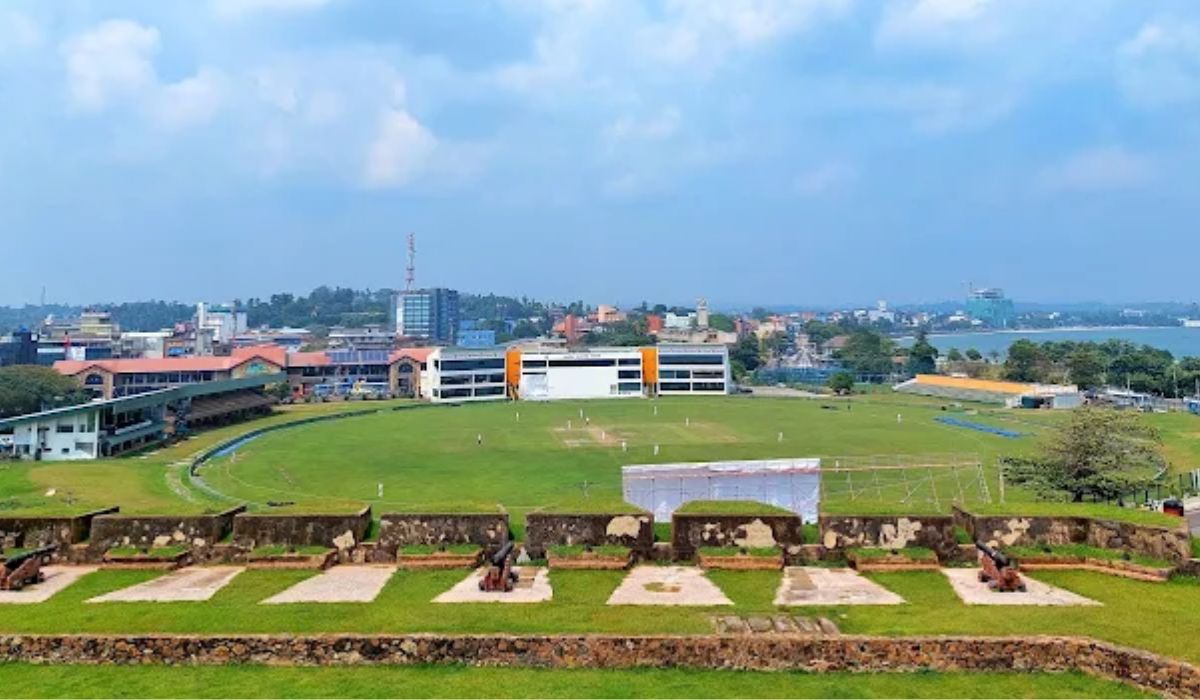
Galle International Stadium is not only the archetypal cricket ground of Sri Lanka, but also one of the most beautiful Test grounds in the whole world. The ground, situated in the southwestern town of Galle, is famed for its historic setting next to the ocean and Galle Fort. It is notably a spin friendly surface making it a far from good ground for any touring teams.
The ground is also called The Esplanade and home ground of Galle Cricket Club. Since 1998 it has played host to International matches and has become a key part of test cricket in Sri Lanka.
India will return for a tour to Sri Lanka in August 2026 and so the international attention turns to Galle, home of cricket in Sri Lanka. The Galle will host the first Test of India tour of Sri Lanka, which is commencing August 15, 2026.
Galle International Stadium Overview
| Detail | Information |
| Stadium Name | Galle International Stadium |
| Also Known As | The Esplanade |
| Location | Galle, Sri Lanka |
| Opened | 1876 |
| International Cricket | Since 1998 |
| Capacity | Approximately 35,000 |
| Home Team | Sri Lanka |
| Home Club | Galle Cricket Club |
| Ends | City End and Fort End |
| First Test | Sri Lanka vs New Zealand, 1998 |
| Surface | Turf |
| Main Format | Test cricket |
| Time Zone | UTC +5:30 |
History of Galle International Stadium
This stadium has a much longer history than just being an international cricket ground.
The site dates back to 1876 as a racecourse. Cricket started to take precedence at the ground, and early school cricket games were played there before it was developed into a proper cricket ground.
Among its historical moments is the annual Richmond-Mahinda cricket match played at this ground since 1905 – which has become one of Sri Lanka’s longest running school cricket traditions.
While the ground first opened in 1927, it was only officially declared a cricket stadium when a turf wicket was laid down in 1945. It was later improved to international standard so that Test cricket could be played there.
Sri Lanka v New Zealand 1st Test (June 3-7, 1998 at Galle) Sri Lanka won the match by an innings and 16 runs (Jayawardene MOTM)
Galle International Stadium Boundary Length
The boundaries of a cricket ground may vary with pitches, match format and the boundary rope. So there is no common square and straight boundary measurement that fits every game at Galle.
The only format available of ground information puts the edge at something longer than 75 yards from the wicket (68.6 metres).
Locally, cricket fans will be aware that Galle is quite often described as having boundaries in the (approximately) 65–75 metre range, depending on direction and match-day rope movement.
So best not to say, for example, that there is a boundary of “70 metres on every side.” The playing boundary may differ.
Galle International Stadium Pitch Report
Galle is arguably the most spin-friendly Test venue in Sri Lanka.
Although the surface is likely to provide decent batting conditions early on, the longer a Test goes on at this ground, the more assistance will be available for spinners. It has cracks and breakdowns; as such, batting becomes harder – especially against good slow bowling.
That explains one of the reasons for Sri Lanka’s historical stronghold at Galle as a home ground. For the same reason, visiting teams require batters who can be patient playing spin and bowlers capable of taking full advantage of a deteriorating pitch.
There is also a major contrast as far as innings scoring goes, according to historical data from the venue. The average Test first-innings score is currently at 375, but drops to 312 in the second innings, and to 239 in the third innings and just 154 in fourth-innings.
Galle International Stadium Test Records
| Record | Figure |
| Test Matches | 49 |
| Average 1st Innings | 375 |
| Average 2nd Innings | 312 |
| Average 3rd Innings | 239 |
| Average 4th Innings | 154 |
| Highest Team Total | 704/3 |
| Lowest Team Total | 73 all out |
| Highest Successful Chase | 344/6 |
ODI and T20 Statistics at Galle
| ODI Record | Figure |
| Matches | 13 |
| Average 1st Innings | 196 |
| Average 2nd Innings | 175 |
| Highest Total | 329/7 |
| Highest Chase | 322/4 |
| 704/3 |
T20 Statistics
| T20 Record | Figure |
| Matches | 12 |
| Average 1st Innings | 108 |
| Average 2nd Innings | 93 |
| Highest Total | 151/5 |
| Highest Chase | 146/3 |
Upcoming Matches at Galle International Stadium
Sri Lanka vs India, 1st Test
| Match | Details |
| Teams | Sri Lanka vs India |
| Format | Test |
| Match | 1st Test |
| Venue | Galle International Stadium |
| Date | August 15, 2026 |
| Start Time | 10:00 AM Sri Lanka time / 4:30 AM UTC |
| Competition | India tour of Sri Lanka 2026 |
Why Galle International Stadium Is Famous
Why is Galle International Stadium so famous?
Picturesque Location
It is located adjoining the sea, just a stone’s throw away from Galle Fort – a UNESCO world heritage site. It is one of the most photogenic grounds of any sport.
Spin-Friendly Pitch
It is especially known for its turning surfaces and how it aids spinners during the course of a Test.
Long Cricket History
Though figures for international cricket at Galle go back to 1998, the ground itself has been around since 1876.
Historic Test Matches
Galle is where some of Sri Lanka’s more favourable Test results have occurred, including significant victories against some of the more powerful international teams.
Home of Galle Cricket Club
The ground is closely associated with Galle Cricket Club and the area has a long history of cricket.
Galle International Stadium Seating Capacity
Currently Galle International Stadium has a capacity of around 35,000.
The stadium is more than just a large cricket venue. Coupled with the surrounding Galle Fort and coastal topography, Test cricket at Galle is an experience like no other.
Galle International Stadium Ends
Two of the main ends at the stadium are:
- City End
- Fort End
The names refer to the location inside Galle and proximity of the world-renowned historic fort.
Galle International Stadium Location
FAQs
1. What is the capacity of Galle International Stadium?
Galle International Stadium has a seating capacity of approximately 35,000 spectators.
2. What is the boundary length of Galle International Stadium?
The boundary is approximately 75 yards (68.6 metres) from the wicket, although dimensions can vary by match.
3. When was Galle International Stadium opened?
The ground dates back to 1876 and became a Test cricket venue in 1998.
4. Why is Galle International Stadium famous?
It is famous for its picturesque coastal location, Galle Fort views, and spin-friendly Test pitches.
Also Read: Lord’s Cricket Ground || Brabourne Stadium || Arun Jaitley Cricket Stadium